⚖️ The EU AI Act: What Small Businesses Need to Know About Building Trust with Artificial Intelligence
The EU AI Act is reshaping how small businesses design AI. Explore its rules on transparency, fairness, and innovation—and learn how to build trust with every algorithm.

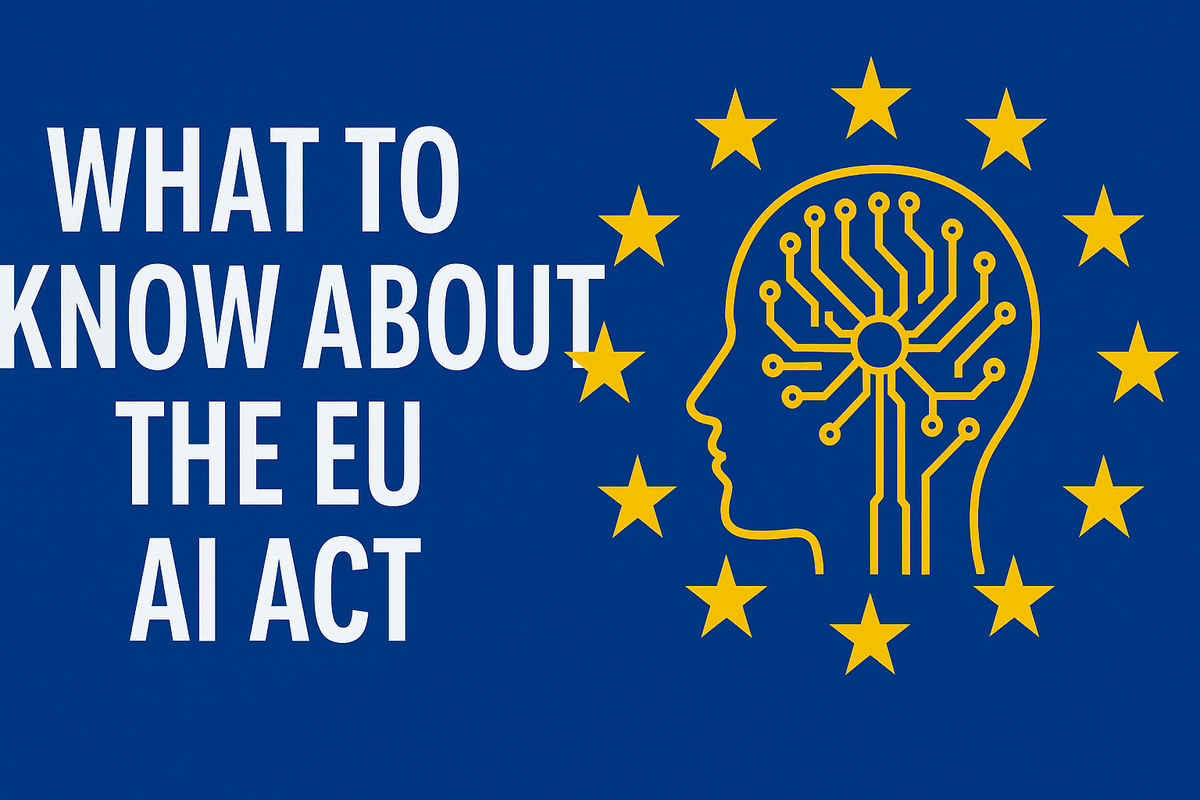
Artificial intelligence isn’t just changing how we work. It’s rewriting the social contract between humans and machines.
And for the first time, there’s a playbook to guide that change.
The EU AI Act is more than another regulation. It’s a moral compass written in legal code. Its goal is trust. The kind that bridges innovation and protection, progress and accountability.
But here’s the real story. This law doesn’t just affect Big Tech. It reshapes how small businesses, startups, and creative teams design, deploy, and dream responsibly.
Let’s break down what that means in plain, human language.
💬 What Is the EU AI Act, Really?
At its core, the EU AI Act is the world’s first complete law governing artificial intelligence. It classifies AI systems by risk level, from “minimal” to “unacceptable,” and sets clear rules for transparency, fairness, and accountability.
Think of it like GDPR for AI. But instead of protecting your data, it protects your digital dignity.
Here’s the idea:
- Some AI is fine to run freely, like spam filters or chatbots.
- Some must meet strict requirements, like hiring tools or health diagnostics.
- And some, such as emotion recognition in workplaces or government social scoring, are banned completely.
That’s the EU drawing a red line around manipulative and high‑risk uses of AI.
Why this matters for small teams: it’s no longer enough to build something that works. You have to build something people can trust.
👥 For Consumers: Transparency Becomes a Right
The Act gives consumers a new kind of power. The right to know when they are talking to AI or seeing synthetic content.
If your small business uses a chatbot, an AI‑generated ad, or a digital assistant, you now need to make that visible. No fine print. No guessing.
Transparency is no longer optional. It is the baseline for trust.
This shift actually opens a creative door for small teams. You can turn disclosure into storytelling.
"Meet our AI assistant Luna. She’s here 24/7 to help you find your perfect fit."
"This image was created with AI because sometimes imagination paints faster than cameras."
See the difference? The rule forces honesty, but honesty builds brand warmth.
🧹 For Workers: Fairness Goes Inside the Algorithm
Here’s a quiet revolution. The EU AI Act doesn’t just protect consumers. It protects the people working inside the algorithm.
Recruitment, performance tracking, and workplace monitoring systems are now considered “high‑risk.” That means any business using AI in hiring must ensure the system is traceable, explainable, and bias‑checked.
For startups building HR tech, that’s a huge wake‑up call. You’ll need to prove your models are fair, not just effective.
It’s the first time regulation stands shoulder to shoulder with workers and says: you deserve transparency too.
For small businesses using AI hiring tools, this is your cue to audit your stack. Don’t just trust the vendor. Ask for accountability reports, test datasets, and bias documentation.
Fairness, in this new era, isn’t a compliance box. It’s your reputation.
🚀 For Small Businesses and Startups: Compliance Meets Creativity
The EU knows innovation doesn’t happen in policy meetings. It happens in garages, coworking spaces, and small studios.
That’s why the Act includes something called “regulatory sandboxes.”
Think of them as safe test zones, supervised environments where startups can build and trial new AI systems under regulatory guidance without fear of massive penalties.
You can experiment, iterate, and refine before you go public.
It’s like having a crash‑tested playground for your AI ideas, where creativity and compliance actually work together.
This is where the EU AI Act quietly becomes a growth tool. By making ethical innovation easier, it lowers the barrier for small players to compete with giants, not through scale but through trust‑led design.
🌍 Why the EU AI Act Is a Global Blueprint
Europe may be first, but it won’t be alone.
The EU AI Act is already influencing global policy. The UK, Canada, and Japan are drafting similar frameworks, and the United States is developing voluntary AI safety standards based on the same ideas.
Even if your small business isn’t based in Europe, you are still in the splash zone.
The global trend is clear. AI builders everywhere will soon need to show:
- How their models are trained and monitored.
- How they reduce bias and improve explainability.
- How they communicate AI involvement to users.
The EU has set the tone. The rest of the world is tuning its instruments.
🛠️ A Practical Workflow for AI Builders
Here’s a simple roadmap for small teams who want to stay compliant and creative under the new rules:
Step 1: Map your AI use.
List every place AI touches your product or workflow. Is it content generation? Decision-making? Data processing? Label them by potential risk.
Step 2: Classify and assess.
Check if your system could be considered “high-risk.” Use the EU’s categories as a guide. High-risk systems include those in hiring, credit scoring, healthcare, and education.
Step 3: Add transparency.
Make AI visible to users. Clear labeling builds trust.
Step 4: Document everything.
Keep records of datasets, testing results, and mitigation strategies. Future you will thank you when an auditor asks for them.
Step 5: Test in a sandbox.
Apply for a regulatory sandbox if you are developing an innovative AI product. It’s a safe place to experiment without fear of noncompliance.
Step 6: Build a culture of ethics.
Create internal check-ins where your team discusses the “why” behind your AI. Ask: is this tool empowering people or replacing them?
🔍 The Ethical Horizon: Guardrails and Growth
It’s easy to see regulation as a roadblock. But the EU AI Act is really a bridge.
It connects trust with innovation. It gives small teams a path to build powerful systems that respect human boundaries.
Yes, compliance adds extra steps. But those steps lead to credibility, and credibility is what keeps customers coming back.
The deeper truth is this: ethics is now a competitive edge.
🤝 Conclusion: Responsible AI Is Everyone’s Job
The EU AI Act is more than policy. It’s a cultural turning point.
It shows that AI can scale and stay human-centered if our guardrails evolve alongside creativity.
For small businesses, this is your moment. You can lead with transparency, build with fairness, and turn compliance into confidence.
Because in the next chapter of AI, trust isn’t a buzzword. It’s the business model.
🤖 EU AI ‑ Focused FAQ
- What is the main goal of the EU AI Act?
To ensure AI systems are safe, transparent, and respect fundamental rights while still promoting innovation. - How does the Act affect small businesses?
It introduces new rules for transparency and risk management, but it also supports startups with regulatory sandboxes and lighter compliance pathways. - What are “high-risk” AI systems?
AI used in sensitive areas like recruitment, healthcare, education, or credit scoring. These systems must meet strict documentation and fairness standards. - What does transparency mean under the Act?
Users must be told when they are interacting with AI or viewing AI-generated content. - What are regulatory sandboxes?
Supervised environments where startups can test and develop AI safely under regulator guidance. - Does this only apply to companies in the EU?
No. If your product serves EU users or collects their data, the rules can apply to you. - How can small businesses prepare today?
Start with an internal AI inventory, improve documentation, and design your systems with fairness and explainability in mind.