"Water Positive" AI Data Centers Are Coming to Town — What Does That Mean?
Meta’s $1.5B AI data center in Texas shows how AI is reshaping jobs, power, and communities. Here is what it means for everyday life.


You’ve probably seen the headlines saying Meta is spending $1.5 billion to build a huge AI data center in El Paso, Texas. It sounds like something far away from most of our daily lives. But what’s happening in Texas is a glimpse of what’s coming to towns and cities all over the country.
These are not websites or apps. They are physical buildings filled with computers that run artificial intelligence. Think of them as AI factories. They are where all the digital thinking happens that powers tools like ChatGPT, image generators, and voice assistants.
So let’s talk about what that means for everyday people, local businesses, and our communities.
The AI Boom's Power Problem
Analyzing the surging electricity demand and societal impact of AI data centers.
Why So Thirsty? AI vs. Traditional Compute
A single generative AI query requires significantly more processing power, and therefore electricity, than a traditional web search. This multiplies energy use at scale. (Source: Schneider Electric)
What’s Actually Being Built
If the internet lives in the cloud, these data centers are the body that holds it all together.
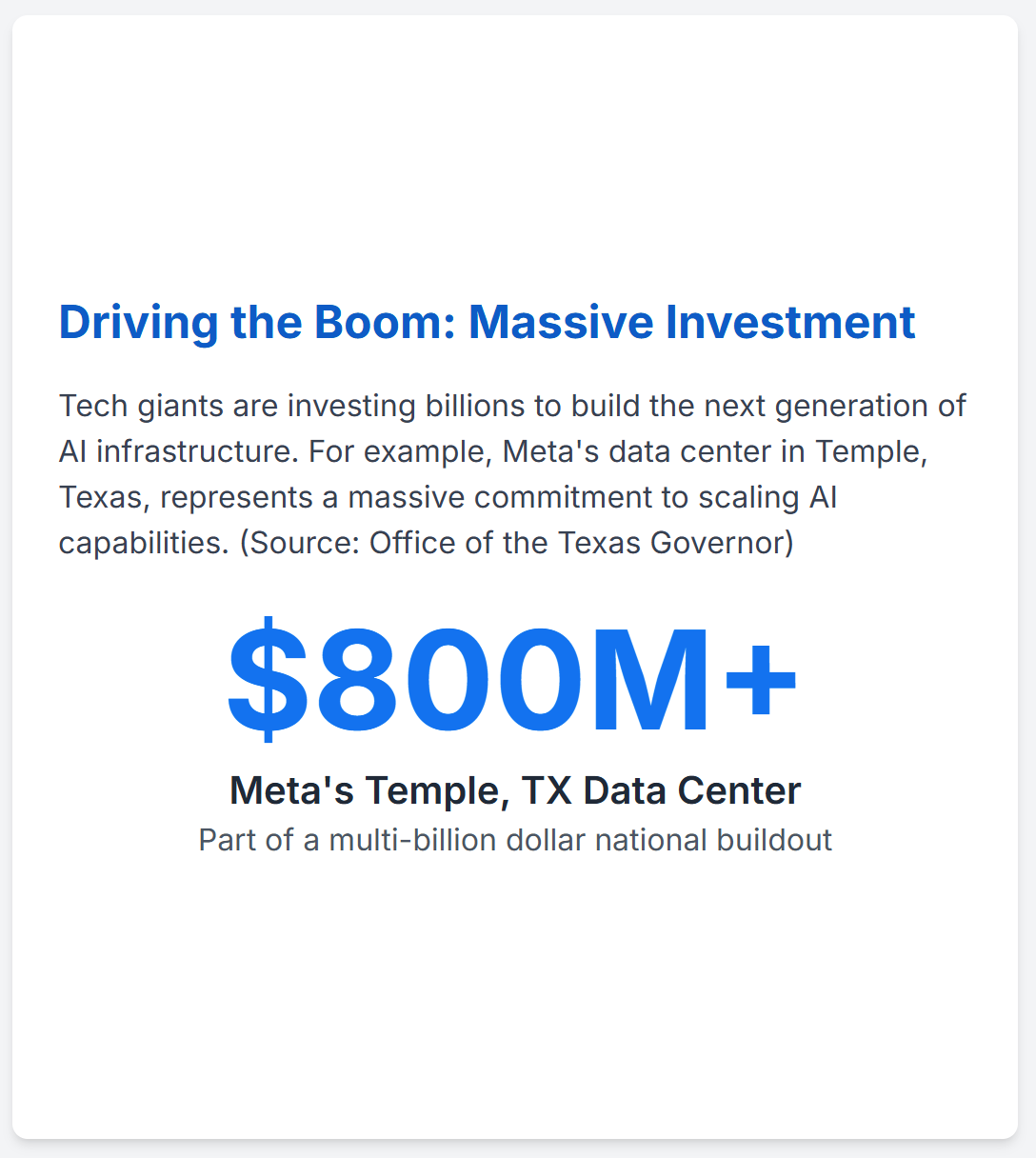
Meta’s new site in El Paso will sit on about 1,000 acres. It will need enough electricity to power a small city. Inside, it will run thousands of special computer chips called GPUs. These chips do the heavy lifting for AI systems.
To keep them cool, the building will use liquid cooling instead of air conditioning. And to power them more efficiently, it will use a new 800-volt direct current electrical system. That helps deliver more power with less waste.
It might look like another big warehouse from the outside, but inside it’s more like an industrial-scale computer brain.
How It Touches Everyday Life
Even if you never walk inside one of these centers, you will feel their impact.
1. Power Bills Could Change
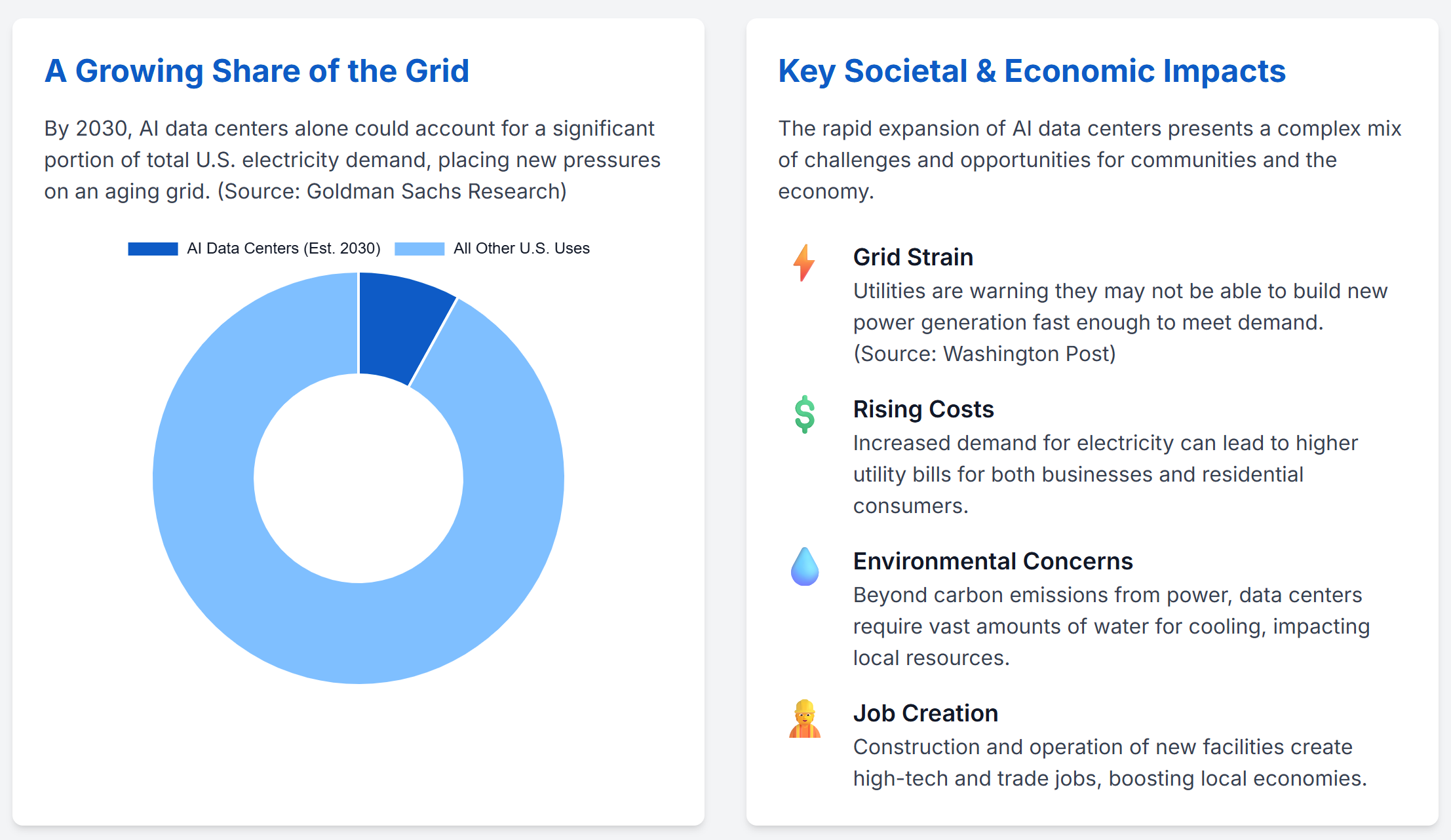
AI data centers use an incredible amount of electricity. When utilities have to build new power lines and substations to support them, the cost sometimes gets passed on to everyone else. That can mean higher electric bills.
Meta has said it is paying for its own grid upgrades in El Paso. That helps protect local ratepayers. It is something communities everywhere should ask for when these projects come to town.
2. Jobs Come in Waves
During construction, there is a big surge in local jobs. Meta expects about 1,800 construction workers at its El Paso site. There will be contracts for electricians, builders, drivers, and suppliers.
Once the center is open, only about 100 people will work there full-time. These are mostly technical jobs that keep the equipment running.
That means the big boom is temporary. But there are still long-term opportunities for local businesses that handle things like maintenance, cleaning, landscaping, power systems, and food services.
3. Water and Noise
AI centers also use a lot of water to stay cool. In a state like Texas, where droughts are common, that raises real concerns. Meta says the El Paso facility will be “water positive,” meaning it plans to return more water to the community than it uses. That is an encouraging promise, but local leaders will need to watch how it is managed.
Noise from these buildings mostly comes during construction or from cooling systems. It is not constant, but neighbors will notice activity while the site is being built.
What It Means for Small Businesses
If you own or run a business, this wave of AI infrastructure could bring both opportunity and change.
Here is how I see it:
- Short-term: Construction creates steady work for local suppliers, contractors, and service providers. Everything from gravel to gloves is needed.
- Long-term: After construction, there is ongoing work in maintenance, security, landscaping, and technical services.
- Spillover growth: More workers mean more people eating at restaurants, staying in hotels, and shopping nearby. Local housing and retail demand can rise too.
The challenge is that large tech projects can also increase land prices and stretch local utilities. Cities need to balance growth so small businesses can still afford to thrive.
How It Affects Daily Life
Even if you live far from one of these projects, the growth of AI data centers will still shape your daily world.
- Energy: Utilities will need more power. Some are adding solar, wind, or even new natural gas plants to meet demand.
- Internet: Fiber networks are expanding around these sites, which could improve local internet speeds.
- Education: Trade schools and colleges are starting new programs for data center maintenance and high-voltage systems.
- Community planning: Cities are rethinking zoning, water use, and infrastructure to support large industrial tech sites.
So while AI might feel digital, it is very physical. It changes the way we build and the way we live.
My View
From where I sit, our companies will naturally feed into this shift.
We have to stand up and make it known that we are not footing the bill for data centers. Without a quid pro quo, where we can receive something.
And for everyone else, the tools trained inside these data centers are already shaping daily work. Marketing, design, logistics, and customer service are all being reimagined by AI. The hardware being built now is what will power the next decade of business growth.
So this is not just about computers. It is about how our communities grow, how jobs evolve, and how local economies adjust.
How Communities Can Win
Here are a few things that smart cities are doing:
- Make big tech pay for its own infrastructure upgrades. That keeps costs off residents’ bills.
- Track water and energy use. Transparency builds trust and accountability.
- Tie tax incentives to real outcomes. Local hiring, training programs, and long-term community support should be part of every deal.
When cities take that approach, data centers become more than just new buildings. They become part of the local story of progress.
The Big Picture
The AI boom is not just happening online. It is happening in real neighborhoods with real impacts.
It will bring jobs, opportunities, and challenges. It will change how power is used, how water is managed, and how local economies work.
If communities set smart rules and businesses stay ready, this can be a moment of growth that benefits everyone.
AI is not just about algorithms anymore. It is about energy, infrastructure, and people.
FAQ
1. How do AI data centers affect my utility bill?
AI data centers use a massive amount of electricity to run and cool their computer systems. When utilities expand power lines or substations to support them, those costs can sometimes be shared with residents — meaning slightly higher electric bills. However, companies like Meta in El Paso are paying for their own grid upgrades, which helps protect local ratepayers.
2. Will these data centers create jobs in my town?
Yes, but mostly during construction. Thousands of temporary jobs are created for builders, electricians, and suppliers. Once the site is up and running, about 100 long-term technical and maintenance jobs remain — plus steady work for cleaning, landscaping, and food services.
3. Do AI data centers use a lot of water?
They do. Cooling high-powered computer chips often requires large amounts of water, especially in warmer regions. Many companies now pledge to be “water positive,” meaning they aim to return more water to the community than they use, but local leaders need to monitor how that plays out in practice.
4. How will AI data centers change my everyday life?
You’ll notice their impact even if you never see one. These centers power AI systems that make your apps faster, your internet more reliable, and your local colleges more focused on tech training. They also influence how much energy your city uses and how it plans future infrastructure.
Key Takeaways
- Meta’s $1.5 billion data center in El Paso is one of many new AI “factories” being built across the country.
- These centers use large amounts of power and water, which can affect local utilities.
- Short-term construction jobs create quick growth. Long-term maintenance and service work keep local businesses involved.
- Everyday life will change through shifts in power, internet, education, and local planning.
- Smart communities can shape this growth to benefit both residents and businesses.
AI is moving off screens and into neighborhoods. As Meta and other tech leaders build new AI data centers, they bring real impacts to local businesses, utilities, and families. At Elevate with AI, we explore how the rise of AI infrastructure connects technology, community, and opportunity — and what it means for the people living closest to it.